Buying a home is one of the biggest investments you’ll ever make. That’s why the home inspection is such a critical step in the process. A professional inspection gives you a clear picture of the property’s condition—what’s working well, what needs repair, and what could become a costly issue down the road.
But here’s the thing: not everything that shows up on an inspection report is worth negotiating. Some issues are minor, while others are non-negotiable. Knowing the difference will save you stress, money, and time.
In this guide, we’ll walk you through:
- What to look for during a home inspection
- Which issues are practical to request from the seller
- Smart ways to protect your investment
What to Look for During a Home Inspection
While inspectors cover hundreds of items, these are the most important areas every buyer should pay close attention to:
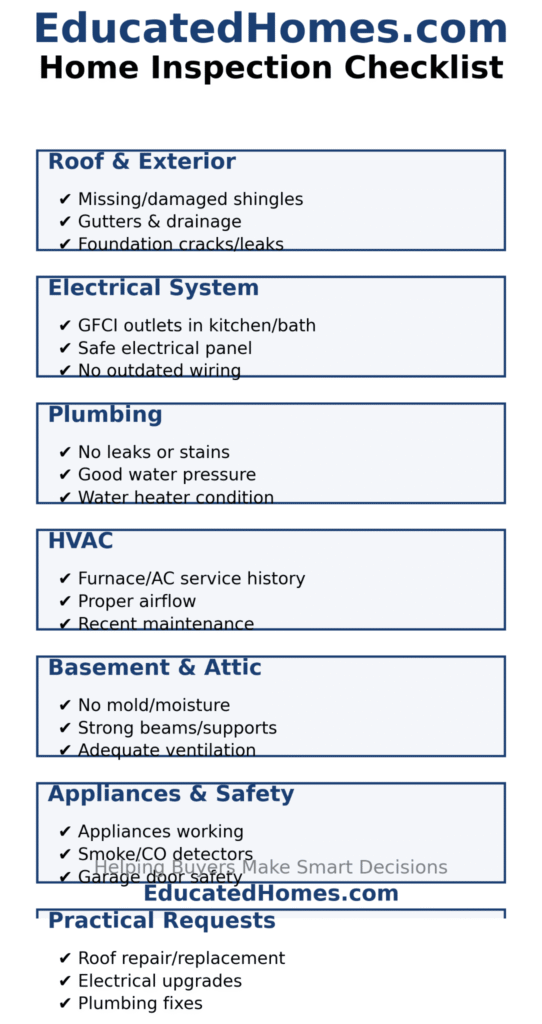
1. Roof and Exterior
- Age and condition of the roof (missing shingles, leaks, or sagging areas)
- Gutters, downspouts, and drainage systems
- Foundation cracks or signs of water intrusion
Why it matters: Roof and foundation issues can lead to expensive repairs, so catching them early is key.
2. Electrical System
- Outdated wiring (knob-and-tube or aluminum wiring)
- Missing GFCI outlets in kitchens, bathrooms, and basements
- Electrical panels that are overloaded or unsafe
Why it matters: Electrical issues are a top safety concern and should never be ignored.
3. Plumbing
- Leaky pipes or water stains on ceilings and walls
- Low water pressure or slow drainage
- Age and condition of the water heater
Why it matters: Water damage can lead to mold and structural problems if left unchecked.
4. HVAC (Heating, Ventilation, and Air Conditioning)
- Age and service history of the furnace and air conditioning units
- Proper airflow and ductwork
- Signs of inadequate maintenance
Why it matters: HVAC systems are costly to replace and essential for comfort.
5. Basement and Attic
- Signs of water seepage, mold, or poor insulation
- Structural integrity of beams and supports
- Proper ventilation in the attic
Why it matters: These areas often reveal hidden problems that sellers might overlook.
6. Appliances and Safety Features
- Functionality of major appliances included in the sale
- Smoke detectors, carbon monoxide detectors, and fire safety equipment
- Garage door openers and safety reverse features
Why it matters: While smaller, these items directly impact daily living and safety.
What to Ask For After the Home Inspection
Not every flaw means you should walk away or demand a fix. Focus on items that are safety concerns, major expenses, or code violations. Here are practical requests you can make:
Reasonable Requests:
- Roof repairs or replacement if the roof is near the end of its life
- Electrical upgrades for unsafe wiring or missing GFCI outlets
- Plumbing repairs for active leaks or broken fixtures
- HVAC servicing or replacement if units are outdated or not working properly
- Structural repairs to foundations, joists, or beams
- Mold remediation if evidence of mold or water damage is found
Items Better Left Alone (or Budgeted for Yourself):
- Cosmetic issues like paint, scuffed floors, or outdated fixtures
- Minor cracks in sidewalks or driveways
- Small repairs that don’t impact safety or function
Pro Tip: Instead of asking the seller to handle repairs, many buyers request a credit toward closing costs or a price reduction. This way, you can choose your own contractors and ensure the job is done to your standards.
How to Get the Most Out of Your Home Inspection
- Attend the inspection: Walking through with your inspector helps you understand the report firsthand.
- Ask questions: If you don’t understand an issue, get clarification on the spot.
- Prioritize safety and big-ticket items: These are worth negotiating.
- Don’t sweat the small stuff: Remember, every home—new or old—will have minor issues.
Final Thoughts
A home inspection is your safeguard against unexpected surprises after moving in. By focusing on the major systems—roof, foundation, electrical, plumbing, and HVAC—you’ll know what’s worth negotiating and what’s best handled on your own.
The goal isn’t to hand the seller a laundry list—it’s to ensure your new home is safe, functional, and worth the investment.