When you’re buying a home, it’s easy to fall in love with the kitchen, the backyard, or the location. But if the property has a septic system, you’ll want to slow down and learn the basics before you sign on the dotted line. A septic system is one of the most expensive parts of a home to repair or replace, and knowing how it works can save you thousands.
What is a Septic System?
A septic system is a private, on-site wastewater treatment system. Instead of connecting to a municipal sewer line, waste from your sinks, toilets, and showers flows into a septic tank buried on the property. Solids settle to the bottom, liquids flow out into a drain field, and natural processes break everything down safely.
Why Septic Systems Matter to Home Buyers
- Hidden Costs: Replacing a failed septic system can cost $10,000–$30,000 or more.
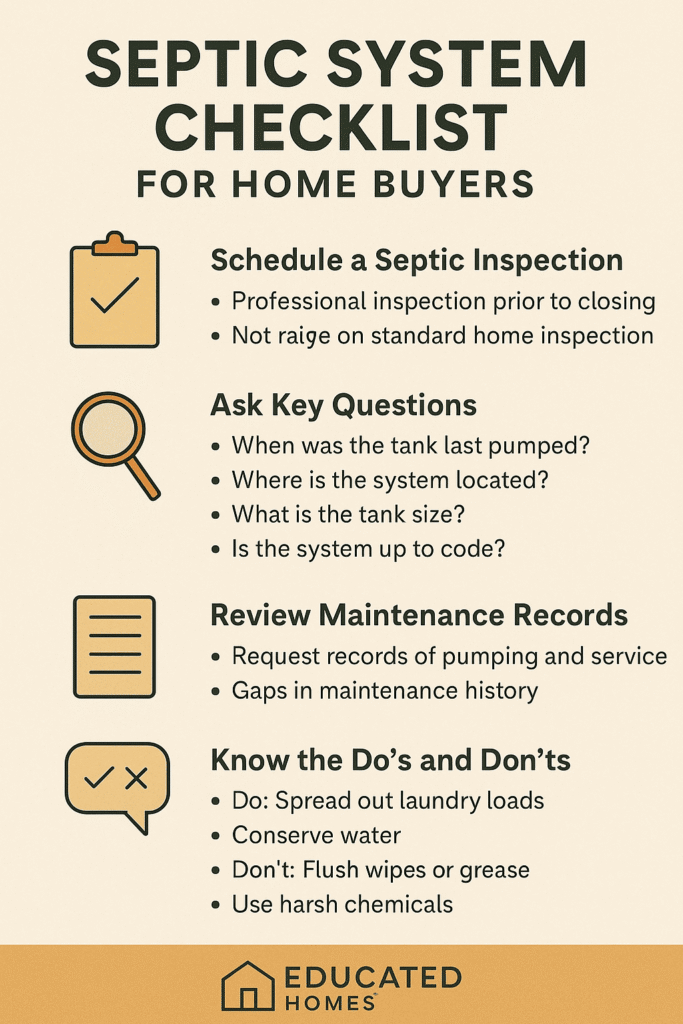
- Inspections Are Critical: Standard home inspections don’t always cover septic systems in detail. You may need a separate septic inspection.
- Daily Living Impact: A septic system limits what you can flush, how much water you use, and how you maintain your yard.
Key Questions to Ask Before You Buy
- When was the septic tank last pumped? Tanks should be pumped every 3–5 years.
- Where is the system located? You don’t want to build a deck, pool, or driveway over it.
- What size is the tank? It needs to match the size of the household.
- Is the system up to code? Some older systems may not meet current regulations.
How to Protect Your Investment
- Schedule a septic inspection before closing.
- Ask the seller for maintenance records.
- Plan for ongoing costs—usually a few hundred dollars every few years for pumping.
- Learn the do’s and don’ts: don’t flush wipes, grease, or harsh chemicals; do spread out laundry loads; do conserve water.
Final Word: Don’t Ignore the Septic System
For many buyers, a septic system is no big deal once you understand it. But ignoring it can lead to a very expensive surprise. An educated buyer knows that what’s underground is just as important as what’s above.
At Educated Homes, we want you to make smart, informed choices—so your dream home doesn’t turn into a money pit.
👉 Pro Tip: Always budget for a septic inspection in your buying process. It’s a small investment that could save you tens of thousands.